The musings from a slow surf traveller in Peru. Published in Wavelength Surf Magazine 2026.
Hopping on a plane, packing up your bag and heading to lands unknown helps shake off the noise of everyday life. Nothing is more tempting than a surf trip, especially when your real life is screaming for you to have a break.
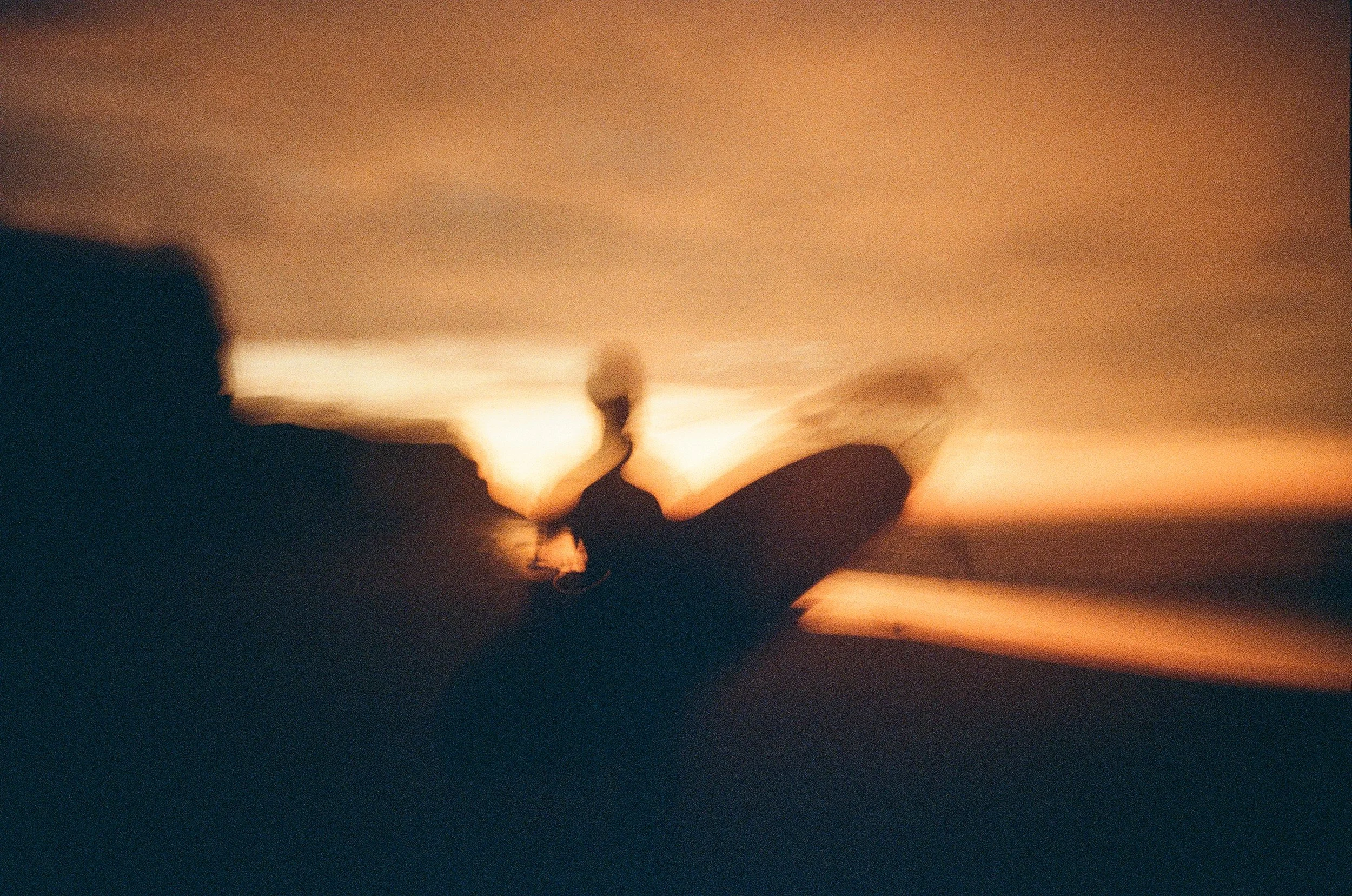
Hopping on a plane, packing up your bag and heading to lands unknown helps shake off the noise of everyday life. Nothing is more tempting than a surf trip, especially when your real life is screaming for you to have a break.
It is only when we return home and put on our usual clothes, walk in our normal shoes, sit at our usual desk chair, that the importance of a surf trip sinks in. Our skin becomes itchy for more. Our holiday photo albums are not full enough. The blonde tips of our sun bleached hair is fading away, along with the memory of new waves going out of sight with them.
This is what happens when a monumental surf trip gets in your bones changing how you feel and look at things for a while. Especially if you are lucky enough to find a place to rest your weary surfboard on the shores of Peru. This is a story about finding homes all over the world and how to give back to them.
…
From the outset, we knew this journey would be different. To start, it was a rainy February morning and we were pleading with the bus driver to cram our nine foot or so board into a National Express bus luggage compartment – doubt began to creep in about our great plans. With a few flutters of the eyelashes, and a big approachable grin, we were on our way.
If you want to be on one of those pesky longboard trips, you really do have to plan ahead, so spending countless hours on airport floors is a given. To get to where we were going takes one drive from Cornwall, then a bus to London, then a flight to Milan, another flight to Lima then a final one to Trujillo, followed by another bus to Chicama. There’s plenty of airport waiting time and sleeping on our makeshift bed, aka our board bag.
People tend to hate waiting at airports. Everyone is rushing around waiting for their next fix, like ants disturbed by the monsters above. But what are we all rushing from? I’ve always found airports to be a wonderful place for stopping us in the moment. You can nap, read, people watch, all while you get excited for the big wild world waiting on the other side of the security check in.
…
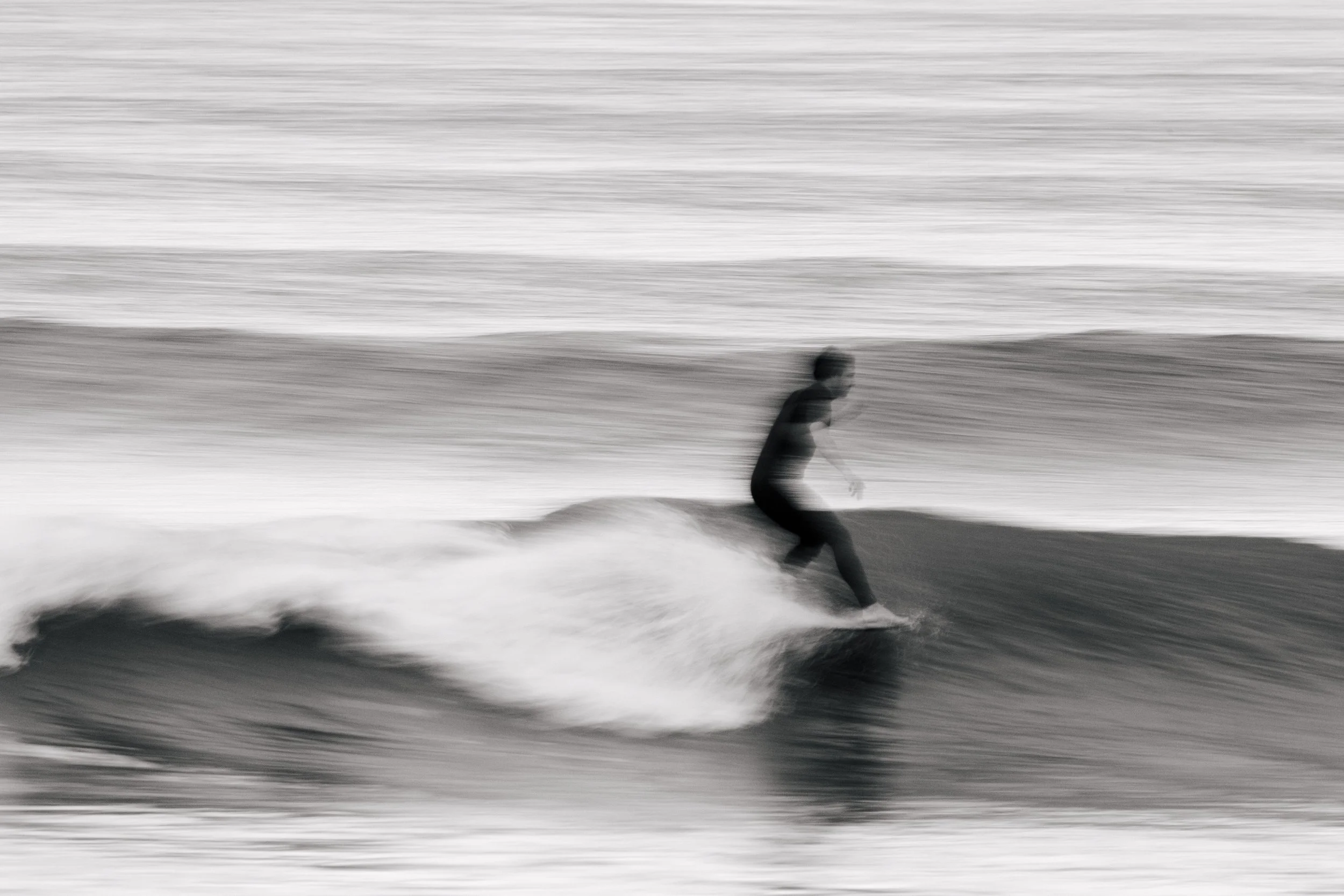
Where are we? As the clouds part, we see never-ending beige, with the occasional perfectly green football pitch. Rows and rows of the same scene, almost like a battle scene in Star Wars. A small airport arises. We fly into Trujillo, with its faded sign of happy travellers welcoming you in, looking surprised to see you there. The surrounding sand hills, as if made by giants, seem to cut this Peruvian city off from the society outside. As we drag our longboard off the tiny conveyor belt I think to myself; ‘Why do surfers always find themselves in these spots so far away from the normal world?’
Driving through Trujillio, which reminds me of trucker towns in Baja, Mexico, I can’t help but think locals must think we are mad for choosing to come here for our holidays. It’s not your usual tropical destination, to put it plainly. There are half-finished houses that look like prisons (a friend later told me, they are affordable housing fixtures made by the Government and abandoned half way through the projects. Leaving people to live in incomplete homes.) Even the airport security seems shocked we are here, rather than the typical tourist wonders of the world in the south. Surfers will choose dust and wind over waterfalls and Instagram mountains, if it means quiet waves. We want wild and free, rather than places plucked out of a perfect moodboard.
As we race through the dust-covered streets, every other wall we pass has a political “Pinta” slapped on it – a painted mural used for presidential campaigns – such as George Forsyth, a former football player, who ran for Somos Peru; the Christian Democratic and centre-right party. My first thoughts when seeing these garish red and blue letters on brick was that it is usually a telltale sign of political unrest and a country torn in many directions. I would later learn about the depths of the political crisis in Peru, and how, over one week in 2020, there were three presidents who swapped in and out of power, due to corruption, deaths and protests gone wrong. Now the fate of the country is between two sides of the coin, the conservative candidate Keiko Fujimori and leftist congressman Roberto Sánchez. You can feel that something is unsettled in this country as the minibus trundles along to our final destination.
Often travelling surfers find themselves in these locations where people may be suffering from Government corruption, and we put that aside so we can keep searching for that ultimate ride. Looking out the window, I knew I wanted this trip to be different. I won’t be another passing through tourist who will leave the place worse than when they arrived.
…
“This is what being alive is to me”, the thoughts running through my mind last night when we surfed perfect long sunset waves an hour from Trujillo. Even with the textured wind, and the wild elements, it was beautiful. Everyone was happy to cheer each other on and share the joy, something that has been missing from other busy surf destinations. I can’t tell if I’m in a state of make believe jetlag, just waiting until I wake up from this glorious feather dream. So long I have needed this physical and mental reminder of why the waves drive everything I do. It’s only day four and I already feel I am returning to myself. Not because of any spiritual experience or your typical travel clichés printed on a keyring. But because I get to be here. Fully here. Not pulled in every which way. Back home, I had a year of turbulence and burnout. Here, I can let that all wash over me as I ride the longest lefts in the world.
This place, this wave, this landscape are all on the fringes of society. I feel like my surfing ancestors who discovered wave riding for the first time. It’s non-complicated, endless, shoulder high fun. I thought about the mirrored places to this one, such as Imsouane and Saladita and how they have not kept all their peaceful magic. What is it that has kept this Peruvian paradise this way?
Custodianship, that is what.
Mamape, which translates to ‘never-ending wave’ has become the first wave in the world to be protected by national law. In 2016 the ‘Ley de Rompientes’ (Law of breakers) was brought in. Stopping any construction being done up to one kilometre from the wave. This movement has held back overdevelopment of this quiet fishing town. As visitors to these waves, we can also help protect them. One of our fellow travellers, and surf coach wizard for the week, Nienke from the Netherlands, met with a local engineer at a fish factory to discuss issues of sewage pollution. Nienke has been coming to this place for eight years, working with the locals to guide people into enjoying this wave without creating a negative impact. While the endless rolling foam keeps coming through for us to play on, the truth is the water is also polluted. Just this week I had to run out from the surf and frantically rip my wetsuit off in order to relieve myself before I soiled my borrowed wetsuit. Dropping like flies, all of the surfers I met were taken down by the pollution poops. Waterways treated as dustbins is an issue we are familiar with, but so often ignore.
Grumbling belly aside, I was not letting anything stop me from surfing till my arms fell off. I felt desperate, as if I will never get to meet this wave again. But all good things must come to an end and suddenly, it’s my last day in this moon-like surfscape. So I’m heading out on the inflatable mat and taking my waterproof film camera out for a spin. I wanted to feel this wave without any performance ego tapping on my shoulder.
Sadly, a group of less considerate surfers have turned up and haven’t followed the rules of respect with their boat. At this wave, a lot of surfers (including ourselves for some days) have the luxury of a rubber dinghy to scoop them up and take them back to the point – which can be a kilometre or so away from the end of the wave. At first I was skeptical of joining the boat brigade, but wavered, once there I saw how the guys at the helm were considerate and all following an unspoken code in order to keep the waves still pure and fun. But not today. A group of frothing, perhaps misinformed, newbies were creating chaos while hitching a ride from the whirling insides of the wave, interrupting the flow of the line up. It gave me a small glimpse into how quickly this place may become like all other natural wonders – overcrowded and over ruled – that is if people don’t respect it for what it is. As humans we struggle with knowing how to love something and let it be, before we ruin it with a little bit ‘too much’.
Time to hit the road. Just an hour's drive away from the isolated Mamape, we arrive at the coastal city of Huanchaco. Bustling with way more life, markets where they address you as ‘Mi Reina’, (Spanish meaning my queen), chicken shops on every corner, and music everywhere. There’s an infectious ecstasy to the streets here. Even though it’s a city, it’s small and intimate, the only cash machine is at the airport in Trujillo. This place is the opposite to Mamape, but beautifully mad in all its chaos.
We had made friends online with Cornish-born Mhairi and her Peruvian boyfriend Erick. Exchanged a few emails, one whatsapp call and next thing we know we are crashing at their humble surf house, with their three rescue dogs Frodo, Kiwi and Mango, just a few blocks away from an amazing pointbreak. We hit the ground running when we got there. No time to waste, we want to see everything and meet all the surf community has to offer.
First task at hand, Latin American speaking lessons at Manuel's language school. Manuel is a smiley, strict and direct Peruvian teacher. His classroom was designed for kids, so I looked like a giant squeezed into the tiny desk and chairs, all the nostalgia of being a student came flooding back. My mind is restless with anxiety of learning something new. I was about to spend the next five days completely out of my depth, stumbling over my past and present tense in a foreign language. But for £25 it was a no brainer, and a great way to not be another ignorant English only speaking tourist.
As I crossed the dried out river near the school, to get back to the town, I noticed the dogs. You can really tell a lot about a place by how they treat their dogs. And here in Huanchaco, Perros son amigos – Dogs are friends. There’s food and water waiting on most block corners, the markets sell dog food by the kilos, and in the winter the locals give them dog coats.
Yet, this place is complex, it has the most intense and beautiful sunsets I’ve seen in a long time, where all walks of life gather to bask in the evening glow. While simultaneously, there is an ocean filled with rubbish and the water has a smell that could put off any keen ocean-goer. Mhairi told me that rubbish gets emptied into the sea from the city of Trujillo and lands on the shores here. One person's trash is another person's problem, I guess. Over lunch, we also met a guy called Gandhi who told us: “What we are seeing right now is the true Capitalist community and tourist economies. We aren’t focusing on collectiveness”. I couldn’t agree more, so what was being done about it?
What makes Huanchaco special is that so many outsiders who arrive here, and choose to stay, don't just call it home – they actively contribute to the community that welcomed them. There's a dislodging feeling about this place, it whispers at you to open your eyes and see what it needs from you in exchange for its fun. Perhaps it's the plastic you brush past as paddling out or the cheeky barefoot kid asking for an ice-cream when you wait in line for yours. It's not a place begging for you to save it, but stand shoulder to shoulder and cherish it together. While it has so much joy and love, it also has a lot of hardships. It is not the picture-perfect place that most tourists are drawn to, but it’s authentic and has charm. While surfing in boardshort weather waves, I met Tess, from Australia, who had been travelling with an open ticket for a while, then eight-years-ago, she found Huanchaco and she never looked back. Now she works for a public health centre called ‘Hands on Peru’. Between party waves we chatted about the nuances of this place. “You can’t come here and ignore what is happening. So we all do our bit to help. But our roles aren’t ones that mean the locals need us. If we left tomorrow they wouldn’t miss our work,” she explained, before paddling off for another wave. That’s how it should be, I thought.
I was inspired to keep meeting the people who made this place what it was. We are introduced to Chamaco aka Carlos Cuba, a local young surfer and fisherman. The sun was already burning hot at 9am, time is of the essence. We head out on his Caballitos de Totora boat, where Chamaco tells us all about the declining state of Peru's 3,000-year-old traditional fishing methods. As we bob near a pelican covered peer, he explained how he is the youngest and last generation still practicing this natural, less harmful form of fishing. He has taken it upon himself to get more young people into it, otherwise this part of the culture dies. The ever-growing demand for seafood has led to commercial fishing boats coming in closer to shore than they’re allowed and as a result, there has been a depressing decline in aquatic creatures beneath the waves here.
After a humbling attempt at riding waves on the Caballitos, we check out where the reed boats are grown and made. Only a short drive away, but usually a long hot cycle ride for Chamaco. Just off the side of a dusty, dry road, we walk across fields filled with ‘Totora’ wetlands and Chamaco tells us the harrowing news of how in 2025 a wastewater treatment plant had a leak. That leak bled into the nearby wetlands, ruining reed production for an entire year and making the boat builders sick for months. His message for any surf travellers coming to their shores “please eat local fish and support the local fisherman”. Oh and come try surfing on a reed boat.
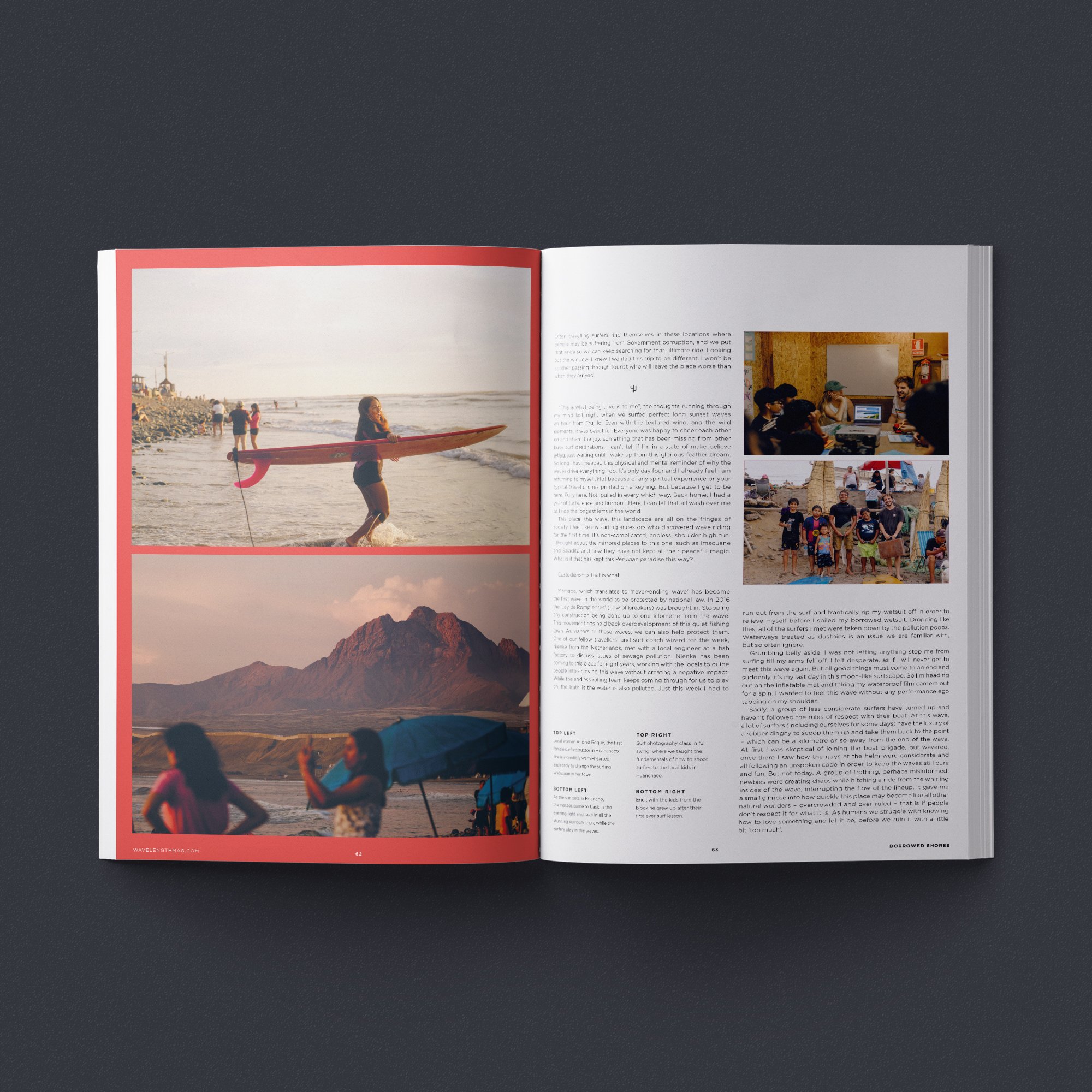
As the day cools down, we have been invited to join Erick in a surf lesson for some of the local kids. Erick grew up in a poorer street in this city and wants to start teaching all the kids how to swim and surf. Him and Tom (my partner) paddle out among the crowds to find some baby waves and glide to shore with the kids on the front – faces beaming with delight and terror. Erick is not the only one to teach the next gen the fun of the waves. There are local organisations such as Surf Cerrito; a surf therapy program providing sessions for kids below the poverty line. And individuals such as Andrea Roque, Huanchaco's first female surf coach and a pioneer in female surfing here. They are all trying to help empower young people to find bravery in the ocean, which can ultimately lead to a better life.
In an attempt to give back in the best way I know how, I organised a surf photography workshop with the social enterprise Fair Mail. They provide photography equipment and lessons to kids in need, so they can earn money and put it towards their positive futures. It’s only a couple days into our stay in Huanchaco and I’m setting up ready to teach a class of teenagers, who don’t speak any English, I’m so nervous. With the help of Mhairi and Tom, who can translate for me, we go through the fundamentals of how to shoot surfers, and how to charge surfers who are passing through. We left a collection of second hand cameras and lenses so the kids could keep practicing after we left too. When we rock up at the beach, passers by think Tom is a famous surfer, as a large group of teenagers are shooting him surf like they are paparazzi.
Who knew you could feel a part of a town in such a short period of time. In all the places I have been lucky enough to travel to, nowhere has ever made us feel a part of the community so fast. Two weeks is a lifetime here. By the end of our trip, we would stop by the local hot spot Dans Kaffee, get hollered in by a new friend Nacho to play chess and watch the morning go by.
A lot of surfers come to this town as it’s a cheap place to lay your head and get your warm wave fix. But this place needs us to be regenerative surfers. To give back and acknowledge all sides to it. Because, as a floating guest, you can make a difference. Even if you’re only on a whistle stop tour. Thanks to Erick and Mhairi we have had the warmest of welcomes to a surf destination we will now be visiting regularly – not only because we’ve left our board with them – but because we will miss the kind people. As we left, Erick and Mhari gave us a letter, stressing the importance of being thoughtful travellers, and that really sparked something in me.
2025 was a year that ripped me open, chewed me up and spat me out. Starting this annum fresh, in a place like Peru, helped me piece it all back together with sand filled glue. Complete with sharp edges and rough lines. Imperfect but perfectly me.
Also, keep your eyes out for a mini surf film coming out by Tom, Mhairi, and I, in collaboration with the heroes of Huanchaco.
